State of Belief
Dr. Matthew Taylor: Following Jesus in a World of Christian Antichrists

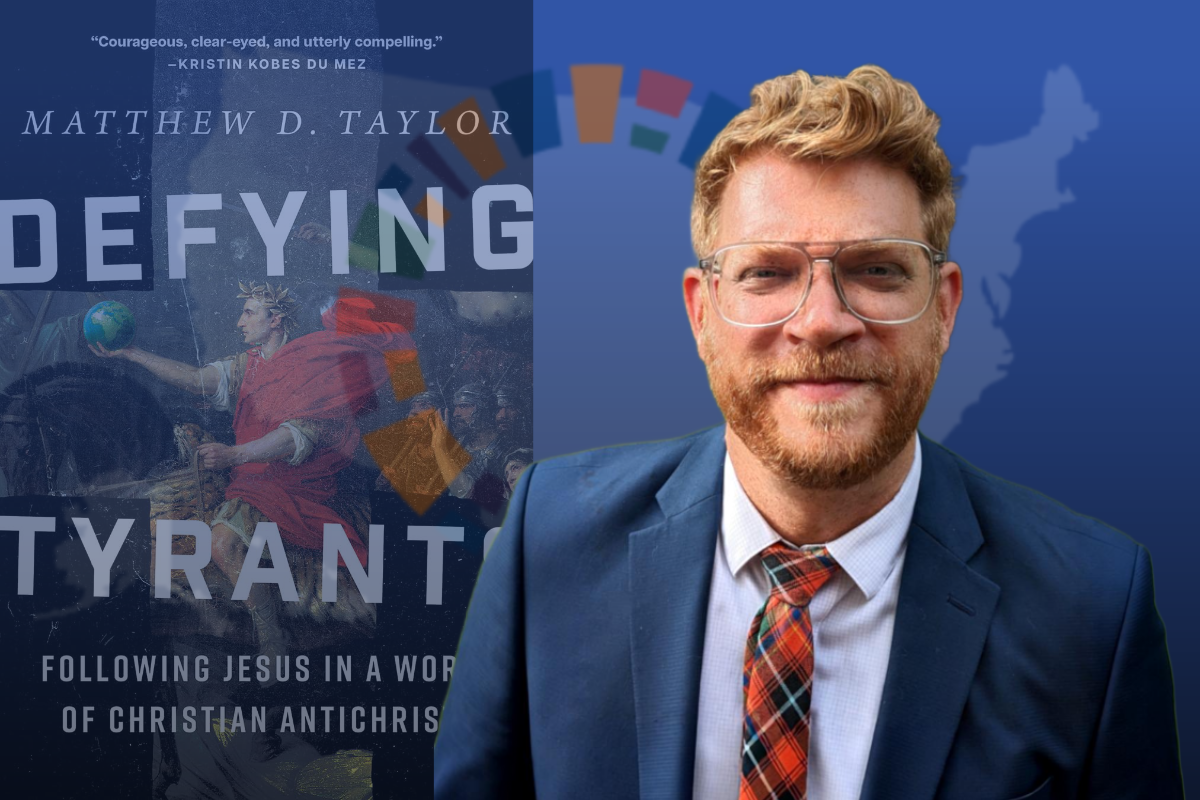
A seismic shift is happening in America’s religious and political landscape—and we need to understand it now. Religion scholar and theologian Dr. Matthew D. Taylor unpacks how Christian nationalism, spiritual warfare, and authoritarian mythologies are reshaping democracy, fueling violence, and distorting faith. If you're wondering why faith is being weaponized to justify tyranny or how religion fuels the dangerous myth of angels vs. demons in today’s politics, this episode reveals the startling truth behind the headlines.
Drawing from his work as the author of The Violent Take It By Force and his upcoming book Defying Tyrants: Following Jesus in a World of Christian Antichrists, Matt argues that understanding and confronting these spiritualized political narratives is essential to protecting both democracy and the integrity of faith.
Dr. Matthew D. Taylor is a visiting scholar at the Center on Faith and Justice at Georgetown University. His Substack is “Matthew D Taylor’s Reckonings."
Transcript
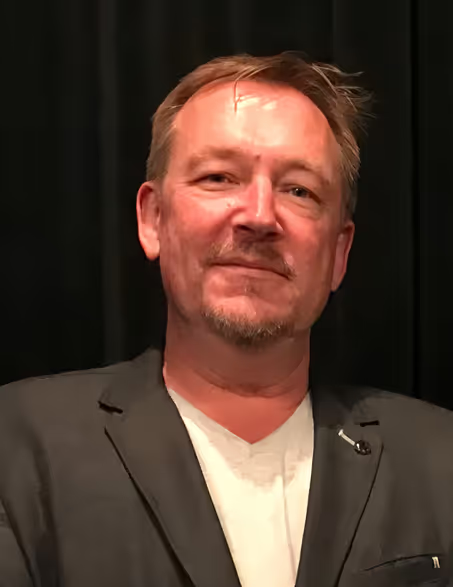
REV. PAUL BRANDEIS RAUSHENBUSH, HOST:
Dr. Matthew D. Taylor is a visiting scholar at the Center on Faith and Justice at Georgetown University. Matt's a theologian, religion scholar, and author of impactful books like The Violent Take It By Force: The Christian Movement That Is Threatening Our Democracy. His next book is coming in October, and just the title gives us a sense of where Matt's coming from: Defying Tyrants: Following Jesus in a World of Christian Antichrist.
Dr. Taylor, welcome back to The State of Belief.
DR. MATTHEW D. TAYLOR, GUEST:
Thank you, Paul, it's great to be here.
PAUL RAUSHENBUSH:
You know, the last time we talked was right after the election of Donald J. Trump to his second term in office. And we talked about the election. We talked about some of the rhetoric that you had heard. A lot of that's really stayed with me. And here we are, gosh, now, a year and a half, a little more, into his presidency. It feels like those who were saying that we were naysayers or doomsayers only underestimated how bad it might get. I'm just curious, what is your take on the first year and a half of Trump's presidency?
MATTHEW TAYLOR:
Yeah, for the critics who accuse me of being a doomsayer, I guess I'll stop saying doom when it stops being accurate, right? I mean, the challenge that we are facing right now in American democracy, in American society as a whole, it is not just a challenge, a political challenge as though like, well, we just need to swap out this party or this set of politicians and then we'll be back to normal.
We are in the midst of a real societal crisis and that is compounding a global crisis. And it is not just a circumstantial thing. This is not just about technology or AI or something. I mean, we are in a governance crisis and also an epistemic crisis of, how do we even know what is real? And this is part of the challenge that we have now, is that for decades, there's been the building of this vast right-wing architecture of propaganda, right-wing media, right-wing sources, influencer culture, all these sorts of things. And that is now being amplified by all three branches of our government and with support from all three branches of our government. They're kind of bouncing off of each other, right? The propaganda plays a certain role and then the government policy plays a certain role and it's leading to mass confusion. It's leading to great disillusionment. It's truly, at a policy level, dismantling the very structures of our democracy. And then it's also engaging in foreign interventionism and war and imperialism around the world that is destabilizing the world order that was built after World War II.
And so all of those crises are all kind of connected to what is happening in the United States. They're all connected to Donald Trump. But even if Trump disappeared from the scene tomorrow, all of those problems would still be here that have been kind of created and stirred up in this moment. And I think it's a genuine challenge that we are facing that will probably take decades for us to climb our way out of.
PAUL RAUSHENBUSH:
So what is the role of religion in all of that? Because what you didn't talk about there was how religion factors into this. I've been saying the term, imperfect as it is, White Christian Nationalism is, it's kind of at the zenith of its power in some ways. I mean, you look at the heads of Congress, you look at the head of the DOJ, or former head, I think probably the next one too, you look at the vice president, Pete Hegseth the head of the department... All these people really hold that particular worldview. And so it's not an add-on. It's actually in some ways kind of the throughline.
MATTHEW TAYLOR:
It is, in certain ways. Yeah. So I always have tension with this phrase, White Christian Nationalism, because I think it's a very useful phrase in reference to certain things, and it can kind of obscure things as well. I mean, when I look at the landscape of American Christian Nationalism today, I do not see unity. I do not see all of these kinds of pieces all fitting together really neatly. I see chaos. And a lot of that is interwoven with issues of race and White supremacy. I mean, I don't think you can understand the role of somebody like Pete Hegseth and his mentor, Doug Wilson, without understanding White supremacy and how White American racism has gotten interwoven with certain strands of Calvinist theology to produce a figure like Pete Hegseth, who wants to be our Wecretary of Holy War and go off and lead us into these crusades. Quite literally he is wanting to reenact crusades in the Middle East. He's talked about this, he's written about this. So yeah, I think White Christian Nationalism is very important for understanding a figure like Hagseth.
There are other figures in the administration, though, who I think are complicated when it comes to this question of White Christian Nationalism. A lot of the advisors around Trump, the Christian advisors around Trump, are people of color who are Christians of color, almost all of them Pentecostal Charismatic, more in the world that I study, right? This independent Charismatic, non-denominational space. And that's where a lot of the leaders who surround Trump are coming from. And they have a very complicated relationship with whiteness, with kind of this White normative culture within the United States. A lot of them are Latino or Black, but they're still immersed in these ideas of Christian supremacy and Christian power. The whiteness gets kind of bracketed and they're angling for Christian supremacy in the country and see that as a path to their own inclusion within the country. And so this is messy and it's actually kind of pulling in different directions.
Similarly, there are people on the far right, supporters of Trump, generally, who are antisemites, who hate Jews, who hate Israel, who are pulling away from Trump right now because of his stalwart support for Bibi Netanyahu and the far-right government of Israel for the war in Iran. They were frustrated with the war in Gaza and the support for that.
You also have people in Trump's coalition, Christian Nationalists, who are philosemites, who ostensibly love Jews. It's kind of a smothering, controlling kind of love; philosemitism is not like the opposite of antisemitism, it's the other side of the same coin, and this is what we would generally call Christian Zionism. These Christians who are devotedly supportive of the state of Israel, extremely supportive of the war in Iran right now, and are kind of propagandizing and championing these ideas.
Well, both of those groups are ostensibly within the kind of MAGA coalition. Right now we're seeing a fracture within that coalition. Not a fracture between a kind of mainstream moderate group, and then these more extremist groups. It's two different factions of extremists! Extremists who are pro-Israel and extremists who are antisemites, and they're kind of pulling in opposite directions within that coalition right now. So yeah, when we look at the administration, you can map it out and say, oh yeah, clearly there's a layer within the administration, within the MAGA agenda, of White supremacy, of kind of Christian supremacy that these folks would maybe unite around something like enforcement of immigration policy, extreme enforcement of immigration policies or anti-LGBTQ policies or anti-abortion. You can catalog: here's the things that they're in support of in general. But then on these points of real tension, actually, there are these fractures that are emerging within Trump's coalition, both pulling in really harmful and unhealthy directions, but kind of going in opposite places.
PAUL RAUSHENBUSH:
Really helpful. So one of the things that you really pinpointed for me or enlightened me just around the kind of the use of spiritual warfare in all of this. We often think in terms of kind of political power or organizational power, who gets to decide a law – but underneath that is a whole worldview that is maybe less understood, especially from those who don't come from religious traditions at all and don't really know that reference point. Just the way that people feel like in some ways they're living out this kind of biblical - using that as a big term - spiritual warfare of a moment and winner-take-all.
How does that factor into this broader moment?
MATTHEW TAYLOR:
Yeah, it's huge. I mean, just in very general terms, if we're just defining this phrase “spiritual warfare”, it's basically an idea that's widespread within Christianity that there are real angels and real demons that are invisible. Generally, they exist in this kind of spiritual realm, but that spiritual realm coincides with the physical realm and that those angels and demons are battling all around us in this invisible space for control over human beings, over nations, over communities, this sort of thing.
And then the spiritual warfare piece of it would be that Christians can participate in this warfare, can join the side of the angels through spiritual practices like prayer or singing worship music or maybe at more extreme end performing an exorcism on someone, right? That's all kind of under this heading of “spiritual warfare.” And you can find these ideas – I mean, part of it is these ideas, or at least the germs of these ideas are found in the New Testament, especially the Book of Ephesians. Paul or the author of Ephesians uses this imagery of putting on the armor of God and doing battle against the devil and his ways. And so Christians have kind of appropriated these ideas and riffed on them and turned it into this whole industry of spiritual warfare today.
A lot of that, I mean, again, very widespread throughout Christianity, the concentration of it, though, of this spiritual warfare kind of industry today is really centered in this non-denominational charismatic space. That's where we find the New Apostolic Reformation, the movement that I study, Paula White Cain, the director of the White House Faith Office, Donald Trump's closest religious advisor, is an independent charismatic. And these are folks who take that kind of spiritual warfare concept and just kind of ramp it up and ramp it up and ramp it up.
And so you hear a lot of this talk in our politics - and this has been an ongoing process since 2015. Part of what I argued in The Violent Take it by Force is that what has happened in the first Trump administration was really kind of, there was an elite evangelical establishment that was kind of in charge of the religious right and in charge of all these evangelical institutions, kind of defining the mainstream of the religious right.
And Paula White Cain and then New Apostolic Reformation and these other independent charismatic leaders, because they were the ones who were kind of surrounding Trump and advising him and had access to him, displaced that old guard and became the new center of the religious right. And with that, they have brought about a culture change in the religious right. You could go back in history, you could find religious right leaders maybe using some kind of spiritual warfare references or language, but just the tone and the tenor of it just keeps ramping up and up and up.
And we especially saw this around January 6th. That's what my book is about: this language of angels and demons; of, we're on the side of the angels and they are on the side of the demons has become so layered into our politics that people even read a moment of electoral contestation, a moment of fighting over the results of an election - which we should not have been fighting, the results were extremely, extremely clear - but they use that spiritual warfare frame to cast that whole debate, that whole argument over the election and then ultimately the events of January 6 themselves as part of this spiritual battle. The demons are trying to stop Trump and we are on the side of the angels and so therefore we need to put him back in office.
PAUL RAUSHENBUSH:
I use that framework to explain to people why it was so necessary for everyone supporting Trump in 2024 to not say that he lost in 2020, you know, because that would be going against this idea that the angels were trying to do something and they were thwarted by the demons and now we have to get the angels back in and fulfill the will of God. But that whole spiritual warfare piece, I think, was lost on a lot of the people who were talking about that time. And that's the reason - for many, it's so mystifying why they won't just admit loss, because it's fine to lose once. You know, that's politics. You do lose and you win. But if you really believe that you're on the side of God, you can't lose. And so I think that's what people kind of missed and why we still have this insistence of that he couldn't have lost.
And that's what feels so dangerous to me as we go into the next election cycle. How are you viewing that movement? Have you been hearing things about how we go into the midterms? The fact that Trump is insanely unpopular in almost every poll and in the majority of American people, but there's probably still a group of very committed Trump supporters who are ready to battle it out in the spiritual realm.
MATTHEW TAYLOR:
Well, and this is part of the point of my book as well, is that if you just listen to the rhetoric of spiritual warfare, you might be mistaken and think that it's purely spiritual. But the reality is, in the spiritual warfare worldview, especially within that kind of independent charismatic space, the spiritual warfare itself overlaps with the real world, with politics. And so they'll often talk about, we are doing battle in the spiritual realm that complements the battle in the physical realm. So the rhetoric of spiritual violence can spill over into real world violence.
And I think we see that in real crystal display on January 6th, where you have this amping up and amping up. A lot of this stuff does come around to elections because in this kind of Manichaean spiritual warfare kind of framework, the country is either ruled over by Christians who are aligned with the way of God, or by demons. And truly, the way that they use this rhetoric politically, there is no in-between in their minds. And so they are very comfortable saying the agenda of Democrats is the agenda of the demons. They want to mutilate our children. They want to destroy our society. They want to attack Christians.
And all of this spiritual warfare talk, all of this talk of Christian persecution, this is all part of how religious nationalism works. It activates a religious majority - in our case the majority of the United States is Christian, but you can see similar dynamics playing out in Turkey, in Hungary, in India, in Sri Lanka, in Myanmar. I mean, it can happen in Buddhism, it can happen in Judaism, it can happen in Islam, it can happen in Hinduism. Religions are manipulable in that way. They can either be tools for polarization and for weaponization, they can also be tools for unity and for healing. And they contain those possibilities. But when you get a religious majority feeling angry, feeling fearful, feeling that like they might lose their power, that's the force of religious nationalism. It's a mobilization of religious sensibilities for political ends.
We're seeing that in Spain right now. Because of the nature of the American religious right today, because of the centrality of these independent charismatics and their rhetoric around Trump, the way they kind of propagandize Trump, spiritual warfare has become one of the real weapons that they use to keep Christians afraid, to keep Christians feeling like they are going to lose their power - especially White Christians. You are going to lose your cultural power. They're going to take this country away from you. We need to take it back.
When there's that kind of rhetoric, suddenly kind of the ideas of democracy, the ideas of, hey, if the country demographically shifts and the majority is now not Christian, it would make sense that there would be less Christian representation in our government. If the majority of the country wants to embrace pluralism and LGBTQ rights, it would make sense that we would do that in a democracy. From these folks' perspective, the country itself is a sacred object that must be held onto and reclaimed; and they're willing to let go of democracy, of these kind of formal processes and Enlightenment values when they feel that their interests are threatened.
So spiritual warfare becomes one of the modalities for getting people galvanized and anxious and feeling like, yes, we might like some of the people on the other side when we interact with them, they seem like nice people and we can have kind of good conversations with them, but really, our enemies are the demons that are behind them. We have to keep fighting against those demons. And it all kind of sets them in the kind of mode of the righteous defenders, as opposed to the ones who are actually destroying our society.
PAUL RAUSHENBUSH:
Yeah, we're about to go in full mode because we're coming into this America 250, which is bringing this all to the fore. There is a very intense intent to frame our country's history as one of, specifically, a certain kind of Christianity that was the reason we were founded and the spiritual power behind that, that was the reason we were blessed. And if we forsake that, then we no longer, you know what mean?
And so that's the reason America 250 - you know, I remember, in ’76, I'm old enough to remember, like, okay, let's celebrate 200 years. Like, da-da-da-da-da. And there are a lot of boats in New York Harbor. And I don't remember it being this kind of battle for who gets to describe America - but they are certainly coming out with a very strong agenda. And I'm just curious how you're understanding what that looks like from their point of view.
MATTHEW TAYLOR:
Yeah, we're speaking in the second week of May. This coming weekend is this big Rededicate event on May 17th. And from their perspective, in their narrative, the United States is a Christian nation, has always been a Christian nation. When they say “rededicate”, you always want to ask, when was it dedicated? Because there's actually very different narratives of this dedication. Some people really want - especially the more charismatic folks that I study, they want to locate the kind of spiritual roots, the covenant of the United States back in the colonial era, prior to the U.S. founding, that kind of relativizes the Constitution and Declaration of Independence in a certain way, because there are these deeper roots of Christianity.
And then some of the other styles of Christian Nationals might say, “Oh, it was at the founding. the founders were all these pious Christians.” They really were not! It was a very secular Enlightenment era when the US was founded. Not a lot of church attendance, including among the founders. It was just not a really spiritual moment in American history. We kind of go through these waves and it was kind of the ebb of religiosity in that era. But they want to say, “Oh, that was the dedication of the country.”
And so now there's this effort where, well, we're going to recapitulate. We're going to recreate this kind of spiritual, kind of mythical spiritual history of the United States and therefore galvanize it again.
Again, from their perspective, that's what's going on this weekend: we're going to rededicate the country. We're going to use the power of the federal government and the White House and all of these kind of religious right infrastructure and institutions that have been built to all kind of unify around a single narrative of the Christian nation and let the president and his advisors kind of cast that narrative once again as a kind of spell over the country for us all to be at peace once again.
I see it as overt Christian Nationalist organizing and weaponizing. I mean, their agenda is very unpopular, and they are probably going to lose in the coming elections. And this is a moment for them to kind of unify around a particular narrative and weaponize that narrative, galvanize their people, and really try to get Christians anxious and scared and motivated to vote in the midterm elections in order to preserve this mythical conception of the United States.
Part of the challenge of all of this is, when you look at the narrative that they construct around Trump, it's not an accident that he is putting out images of himself as a king, that he's putting out images of himself as Jesus, that he is putting out images of himself as the Pope. They have sacralized Trump. They have made him a holy object. even at his Doral golf course, we were seeing a golden statue of Trump, right?
PAUL RAUSHENBUSH:
That was the craziest thing.
MATTHEW TAYLOR:
Trump has internalized some of these messianic narratives that come from the Christian Nationalists and he's embracing them. And the images they use from the Bible to talk about Trump are often kingly images. David and Cyrus and Jehu and these figures of kings… What was 1776 about? 1776 was a principled declaration that the King of England and these other tyrants of Europe might say that they are put in office by God, that there is a divine right of kings, but we don't buy it. We don't accept that. We believe that there's inherent dignity in every human being and that every human being should be able to enact their dignity, to live it out in society in a way that, as long as it's not harming other people, they can pursue their happiness. That's the Declaration of Independence.
And yet even as these people who claim to be championing the cause of 1776, all they are doing is reinshrining the divine right of kings through a different avenue, through different rhetoric - and the ceremony itself is such a violation of the principles of 1776 that it's almost like, you're in kind of Bizarro land to even notice what they're doing.
PAUL RAUSHENBUSH:
Yeah, is, it's wild. And this podcast is going to come out and we'll have hindsight on that event, Rededicate 250. But I think it's telling that it's all these cabinet members. It's religious leaders and cabinet members, and I just can't believe it's really legal, frankly, because they're using all sorts of like… I don't know where the money's come from. It seems like it's an endorsement. And if you look at the video for this event, it is so crazy because it says, “everyone is welcome”. And then says in the next paragraph,” bring your church.” There's no bring your synagogue, bring your mosque. It's like, bring your church. And then the main image is a big wooden cross on a flag. So I think any idea that this is actually for everyone is complete like malarkey, if I'm going to go back to that phrase.
So I want to switch gears and talk about another religious phenomenon that we've seen, actually, which is other religious leaders stepping up in this time and really getting organized, showing up, and being effective - and their voice being heard in some really important ways.
One example of that is Minnesota, where there was incredible organizing around Metro Surge. It wasn't any one religious tradition, but there were faith leaders who were organizing there, faith leaders who were some of the most enduring images of faith leaders getting shot with pepper balls, protesting outside of detention centers, and I think a powerful undermining of the claim to religion that the authoritarian efforts of Trump has been trying to claim, which is: we represent God and country. And actually, you're seeing really, I would say, mobilization from other religious traditions. How do you see that? How does that look like to your scholarly mind?
MATTHEW TAYLOR:
Well, every religious tradition contains the possibilities of authoritarian appropriation and kind of religious nationalism. It also contains these possibilities of liberation, of resistance, right? These religious traditions, their vast vocabularies, their vast bodies of scripture, of reflection, that can be used in all these different ways.
You know, my friend and colleague, Susan Hayward and I, we did a podcast series that came out in the fall of ‘25 called American Unexceptionalism. And the premise of the podcast was we were interviewing experts and activists from the front lines of resisting religious nationalism outside the United States. were talking to people in Myanmar and Sri Lanka who were resisting Buddhist nationalism; were talking to people in India who were resisting Hindu nationalism; were talking to people, experts on Israel, Palestine, talking about religious Zionism, and learning from them saying, teach us, in the United States, what it looks like to resist religious nationalism.
And one of the lessons we just heard over and over and over again in that series was: it's really important for the resistance to do theology, too. And not just theology in this kind of abstract sense of, like, here are some different ideas or a different interpretation; but utilizing all the symbols, all the power of religion. The leaders with all of the different symbols that they have on them that signal their kind of particular moral authority and letting those people help to lead the protests.
And so Susie, my cohost on that series, is a clergy member in Minneapolis, was one of the first clergy on site at several of these shootings that happened. And I think we saw in Minneapolis the power of religion as resistance. And again, it was not a unified: okay, well, we had all of the Presbyterian clergy out, right? No, it was very ecumenical. In fact, it was very interreligious. You had Jewish and Buddhist clergy on the front lines in Minneapolis, and Muslim clergy, using their religious authority, as well, as part of these protests.
PAUL RAUSHENBUSH:
Indigenous, as well.
MATTHEW TAYLOR:
Yeah. And the reality is, I think that, in many ways, the Trump administration thought that Minneapolis would be an easy target. In fact, I think they kind of walked into a trap there, because Minneapolis is - I spent some time there in November. It's one of the most mobilized and organized interreligious networks in the country of these clergy who, after the George Floyd protests, actually built a lot of infrastructure themselves, a lot of connections and networking themselves. And we saw it in the way that the Twin Cities mobilized in the midst of this ICE operation.
We saw how galvanized they were, how ready they were. It's kind of the heartland of liberal Protestantism is, the Twin Cities in the country today. And liberal Protestants showed up - as well as Catholics and Jews and Buddhists and all these folks. So I think that that was a very, very hopeful sign. And I would say that Minneapolis has set the model that as we see other authoritarian power grabs, as we see other ICE deployments like that, I really hope that other cities take their lessons from Minneapolis and mobilize the clergy and put them on the front lines.
They don't have to be the ones leading the protest. They're the ones kind of lending authority and blessing the protests. And I think that is actually a very, very powerful message that, again, does counter the… Because part of the problem is, if the Christian Nationalists are the only ones talking about Christianity in public, they win that conversation. They're persuading more people, right? But if the other side, if the resistance is also using the language and symbols of Christianity, the leaders from Christianity, to help speak their messages, you actually have real contestation, real theological contestation in the public square, which is what we need today.
PAUL RAUSHENBUSH:
Well, you know, one of the things we did right away, because one of the, I would say, kind of unforced errors with this administration was the way they went after religious communities immediately, attacking the Catholic Church. Even before Pope Leo came along, JD Vance was accusing the Catholic Church of padding the bottom line. It's like, really? You want to go after the Catholic Church like that because of their work with immigration? You know, you want to go after the Lutherans? You want to go after the Quakers? You want to go after the Cooperative Baptists? And so Interfaith Alliance, we immediately were like, this is an administration that is hostile to religion that isn't in political lockstep. And I think that that is something that if you're not in political lockstep with this administration and you're part of a religious community, you are not considered legitimate.
But we can say the same thing. You know, if you really recognize religious freedom, it's not just the people who are in political lockstep with you. And so it's been fascinating to see. And this whole anti-Christian bias task force, which is very much this like, you know, we've been oppressed and we're going to get vengeance now. Now they're going to get their comeuppance.
And it's all the rehashing of, you know, Trans Day of Visibility, which happened to fall on Easter. And Biden does an Easter proclamation and then has the audacity to recognize that these other people also deserve some sort of recognition. And it happens to be on the same day. They're like, you're supplanting Easter. And yet this year you have this profanity laden proclamation from Trump. And they're like, well, you know.
So I do think it's important and I think Rev. Hayward is such a good example. And she does have that international perspective because she worked with US Institute for Peace…
MATTHEW TAYLOR:
The Donald J. Trump United States Institute of Peace, Paul. It's been renamed.
PAUL RAUSHENBUSH:
Can you imagine? I mean, all of that is just like… I just can't wait ‘til… there's just going to have to be a lot of scrubbing. But, you know, I think it is hopeful because everywhere we go we see so many people organizing. And I think that one of the things that's slightly annoying is I see headlines like, Pope Leo reminds people that there is a Christian voice that's not Trumpism… I'm like, there have been other people before Pope Leo, including his predecessor. But I do think I'm curious how you understand the impact of Pope Leo, just as a scholar like yourself, who looks at the big picture, and how do you understand Pope Leo's influence?
MATTHEW TAYLOR:
I think it's very, important that he's an American. And it was not an accident that the College of Cardinals chose, for the first time, an American Pope in this kind of second Trump era, or maybe the ongoing Trump debacle that we've been living with for 10 years. I think there's a way that Pope Leo is kind of counterpoised against the administration - not in this hyper political way, I mean, the Pope is the Pope for the whole world. There are elements of Catholic social teaching and Catholic values that do not map neatly onto any political party.
It's a global Church that has its own priorities, and it's very, very hard to synchronize that neatly with any nation's political parties, frankly. But the way that Leo has been operating in office, I think he has been holding up the mirror and challenging - and I think the fact that we have a Catholic vice president who is so willing to buck against the mainstream understanding of the Roman Catholic Church and even operate in rebuke and defiance of the Pope, telling him that he should be more careful when he talks about theology.
PAUL RAUSHENBUSH:
Yeah, yeah, that was rich. That was rich.
MATTHEW TAYLOR:
As a Protestant, I'm just kind of like, wow. If that was coming from a Protestant, I'd say, okay, par for the course. Coming from a Catholic convert, no less, I'm like, that's saying something. That's some hubris to tell your own pope that you, as somebody who's been a Catholic for a few years, really, can have some wisdom to teach the pope about theology. But there's a way, though, that as Americans we tend to be myopic and America-centric. And it's a genuine flaw in our national character that we put ourselves in the center of the universe and don't tend to think about the rest of the world. And I think the College of Cardinals recognized that flaw in the American character and also chose a Bishop of Rome who can counter that in certain ways and subvert that. And when Pope Leo, when he speaks with that Chicago accent and in English and is pushing back on some of these things, it just resonates differently. I think it resonates differently with American Catholics.
PAUL RAUSHENBUSH:
It does. It lands very differently. He said something I just loved - and he said a lot more things after it, but he just said: I'm not afraid. I'm not afraid of you. I follow the Gospel. I'm not afraid. And I just thought that was pretty great.
I want to get to your book that's coming out because I think a lot of this that we're talking about is going to, this is going to be a book for the moment. And so Defying Tyrants: Following Jesus in a World of Christian Antichrists. “Christian antichrists” is a really powerful phrase. Tell me about that.
MATTHEW TAYLOR.
So I started writing this book the week after the ‘24 election, and it'll be coming out in October of ‘26. And I'd been grappling for a while with how to speak theologically in this moment. I'm both trained in religious studies and in theology. And one of the things that spurred me to write this book was, I was doing some preaching and teaching from some New Testament passages. And I had this realization of we've been really misunderstanding this concept of Antichrist for a very long time. The phrase, the word “antichrist” only occurs in one small little corner of the New Testament, the Epistles of 1 and 2 John. Very short little letters at the end of the New Testament. But then it gets taken as this kind of eschatological end times dictator who's going to persecute Christians, and you're blending in elements from Revelation and from 2 Thessalonians, and then going back to the Old Testament, and this becomes this amalgam that we call the Antichrist. If you go and read 1 and 2 John, the word is more often used in plural than in the singular. And it's especially the kind pivotal passages in 1 John Chapter 2 where the author says, “You've heard that the Antichrist is coming, but now many antichrists have come.”
And so part of what I'm trying to explore in that part of the book is understanding, well, what does it mean when it uses it in the plural? Believe whatever you want about the singular. Maybe the Antichrist was a historical figure in the first century. Maybe the Antichrist is some kind of domineering figure at the end of time. Whatever. Believe whatever you want about that. What is it doing in the plural? And when it's in the plural, if you go and read those letters carefully, it's describing a situation in which this community of early Christians, what we call the Johannine community, the community of John, has fractured; there's a group of Christians who've broken away. And it's that group of Christians that gets called the antichrists.
And so I think it's really important to understand, what went wrong with that group of Christians that they get this - I mean, that is an extreme title within the early Church. The early Church defines itself as the people of Christ. Who are these people who claim to be people of Christ who are now labeled antichrists, right? And if you go through the letters carefully, what has happened is those Christians have abused power. They have claimed superiority over their fellow Christians. They have claimed that they have special knowledge, special insight into God, that they have special access to God. And then they've told everyone else: if you want access to God, you come through us. We're better than you. And there's even insinuations that they've used violence or threats of violence to do this.
And so that is the context in which this term antichrist is being used in the New Testament. Christians who are abusing power in the name of Jesus, doing the opposite of what Jesus taught us, but saying that they are in alignment with him. That is what earns this rebuke of antichrist. And I'm not saying, well, we need a new insult to throw around at our fellow Christians. I think this is actually a very helpful lens for understanding Christian history and for how horribly wrong Christianity has gone at so many turns in the Crusades, in Christian Nationalism, in Christian imperialism, in the Holocaust, enslaving people, right?
What I see going on across all of these instances of Christian degradation and dissolution are Christians who abuse power in the name of Jesus, proclaim their alignment with Christ even as they do the opposite of what he taught us. And I think it's useful, then, to be able to say that within Christianity, there's a powerful force of antichrists.
PAUL RAUSHENBUSH:
And how does that lend itself to defying tyrants? I mean, you just kind of named it in some ways, but what does it mean for people who are really trying to follow Jesus? I appreciate that it's a helpful framework and in some ways flips what is often thrown, you've been online enough to be called anti-Christ, I'm sure. That happens to me. Flipping that. But when it comes down to the work of somehow following Jesus to the best of our ability, what does that mean for those of us in the Christian tradition who are trying to follow Jesus in a way that is not duplicating the kind of abusive power of antichrists?
MATTHEW TAYLOR:
You know, I grew up evangelical and I was taught that as Christians, is our goal, it is our duty, to emulate Christ in all things. That Jesus is the model for all Christian living, which I agree with. And yet I wonder why we've never learned from his politics - because Jesus was one of the most anti-authoritarian human beings, I think, who has ever lived.
If you accept the idea of the incarnation, which I think is fundamental to Christianity, God became the lowest human being in society. God became the peasant living on the outskirts of the Roman Empire, of the Pax Romana, and dignified humanity from the bottom up, and cared for the least and the lowest. And then you look at the way that Jesus taught his followers, he's constantly pointing around at this bigger kind of authoritarian culture, this tyrannical culture, and saying, don't let that be your model. Don't be like the lords of the Gentiles. Instead, become the servant of all.
And when we talk about the kingdom of God, the kingdom of God is not just another dictatorship that replaces the kingdom of Caesar. The kingdom of God subverts the kingdom of Caesar because God is not a tyrant. God does not need to dominate us. God does not need to force or coerce us. God comes in the form of a peasant preacher and healer. God comes in the form of servants who are dignified by the love of God and go out and care for people with less power and less privilege in society. That's the model that Jesus teaches us in defiance of these systems of hierarchy and domination that he himself was living under. And it's not a coincidence that Jesus dies the death of an insurrectionist against the Pax Romana, right? The cross was the punishment reserved for insurrectionists, for people who defy the order, who threaten Caesar. And so I think if we're going to follow Jesus and emulate him in all ways, I think it is actually our Christian duty to defy tyranny, to stand up against that.
In the Gospel of John, when the Jewish leaders are talking to Pilate about Jesus, they say, don't you know that anyone who claims to be a king is defying Caesar? And they're right! Jesus was defying Caesar. Jesus was resisting this whole imperial and authoritarian system that he had grown up living under, and he's teaching his followers to do the same. When he says, pick up your crosses, how are they supposed to interpret that other than choose a path of life that could very well lead to your execution by empire? This is the tension that I think we see.
And I think what they're talking about when they're talking about antichrist in the New Testament is the importation of that authoritarian system into the Church. So they were trying to resist the authoritarian system in the society, but they were also trying to resist its incursion into the Church, its assumption into the Church, the incorporation of the way of Caesar into the Church.
And I think that we need that today, too, because it's not just that Christians happen to be all fine in our churches and everything's going swimmingly in our institutions and things are just bad in our politics. Look at what we see all around us. All around us are these Christian leaders who are bent upon abusing their own power, whether abusing people sexually, abusing money, abusing power and being domineering in their churches. We have imported a class of tyrants into American Christianity. And I think it is actually our duty as Christians to resist that group of people, to call them out, to challenge them, and even to use this label where appropriate that they are anti-Christ and that they are claiming alignment with Christ and doing the opposite of what he taught us.
PAUL RAUSHENBUSH:
Dr. Matthew D. Taylor is a visiting scholar at the Center on Faith and Justice at Georgetown University. In addition to books like The Violent Take It By Force and the upcoming Defying Tyrants: Following Jesus in a World of Christian Antichrists, he is the creator of two podcast series, Charismatic Revival Fury: The New Apostolic Reformation, and American Unexceptualism: Global Lessons in Fighting Religious Nationalism. His Substack is Matthew D. Taylor's Reckonings.
Thank you so much for being with us on The State of Belief again, and we will definitely have you back when it's closer to the release date of Defying Tyrants. So thank you. Thank you so much.
MATTHEW TAYLOR:
Thank you, Paul. Great to be here.